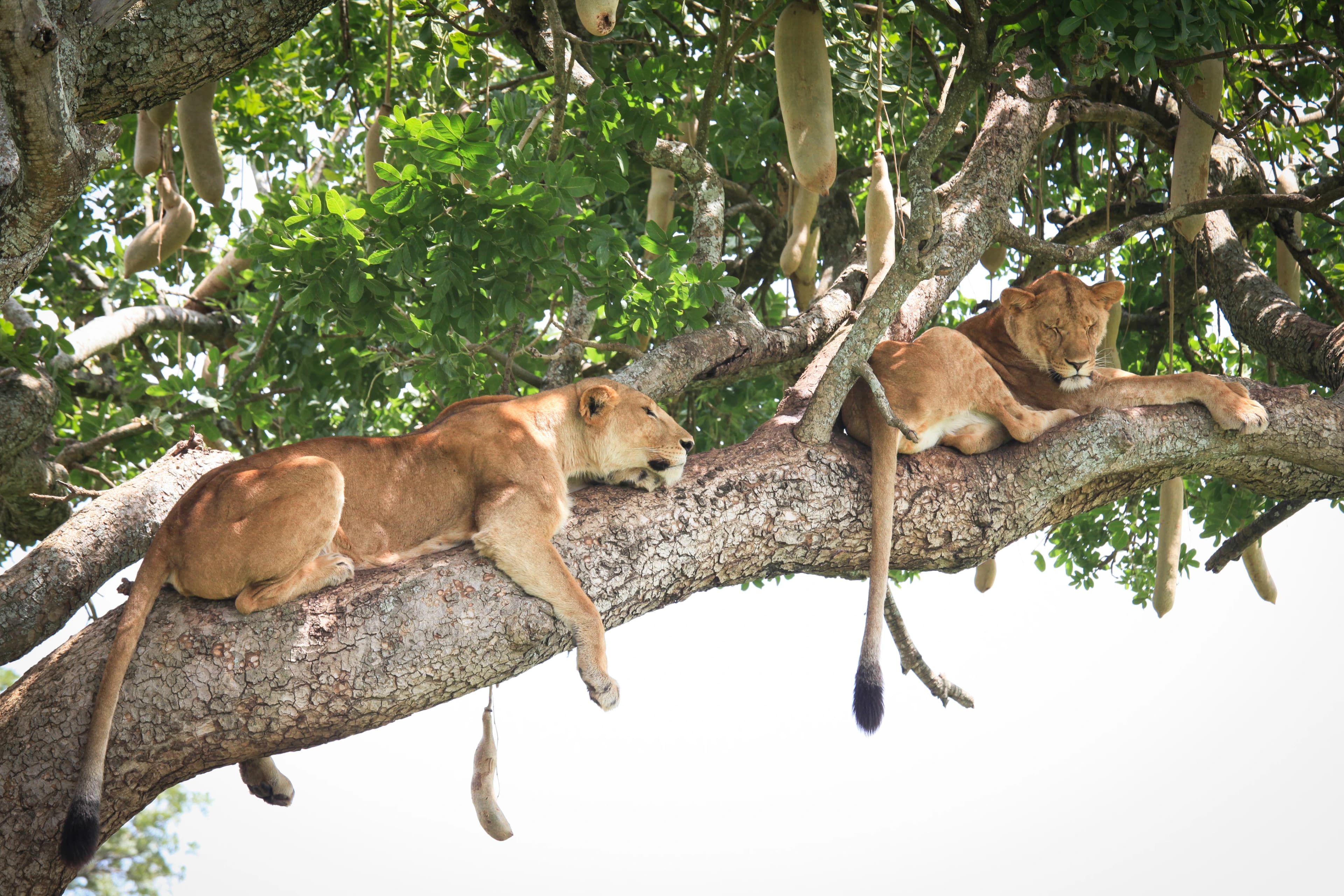
Tree-Climbing Lions of Uganda
Lions draped over fig-tree branches in Ishasha, one of the rarest sights on an African safari.
Where to see tree-climbing lions in Uganda
Uganda's tree-climbing lions live in the Ishasha sector of Queen Elizabeth National Park, in the far south-west of the park near the border with the DR Congo. Ishasha is quieter and wilder than the park's busy northern plains: open grassland dotted with large fig and acacia trees, crossed by the Ishasha and Ntungwe rivers.
Lions almost everywhere else stay on the ground. In Ishasha, the prides regularly climb into the trees and spend the hottest hours of the day stretched along the branches, legs dangling, watching the plains below. Very few places in Africa show this behaviour so consistently.
Why do the Ishasha lions climb trees?
Researchers have several explanations, and the truth is probably a mix of them:
- Escaping flies. Biting flies and ticks are worst at ground level.
- A cooler perch. A branch catches more breeze than the hot grass in the heat of the day.
- A better view. From the trees, lions can watch the herds of Uganda kob and topi they hunt.
- Learned behaviour. Cubs grow up watching the adults climb and copy them, so the habit passes down the pride.
Best time to see the tree-climbing lions
Ishasha can be visited all year. The lions are most often in the trees from late morning into the afternoon, when the ground is hottest, so game drives here are planned differently from the usual dawn start.
The drier months of June to September and December to February have shorter grass and firmer tracks, which makes the lions and the trees they favour easier to reach. In the wetter months the landscape is greener and quieter, with fewer vehicles.
What else you will see in Queen Elizabeth National Park
- The Kazinga Channel boat cruise, with some of Africa's densest concentrations of hippos, plus buffalo, elephants and waterbirds along the banks.
- The Kasenyi plains, for classic game drives among Uganda kob, buffalo and lion.
- Elephants, buffalo, topi and leopard across the park, and more than 600 bird species.
Our African safari animals guide covers what you can see across Uganda and Rwanda.
Where to stay in Ishasha
Staying inside Ishasha lets you be with the lions when they are in the trees, rather than arriving on a long day trip. Our journeys use Ishasha Wilderness Camp, an intimate tented camp on the banks of the Ntungwe River inside the sector, where elephants and other wildlife can pass through camp.
Combine Ishasha with chimpanzees and gorillas
Ishasha sits between Uganda's two great primate destinations: Kibale Forest for chimpanzee trekking to the north, and Bwindi for gorilla trekking to the south. That makes it a natural stop on the way to the gorillas.
These journeys include the tree-climbing lions of Ishasha:
- 8-Day Uganda Safari: Gorillas, Chimps and Game Drives
- 10-Day Uganda Fly-In Primate Safari
- 12-Day Uganda Signature Safari
Or plan a tailor-made Uganda safari with our team.
Frequently asked questions
Where can you see tree-climbing lions in Uganda?
In the Ishasha sector, the remote southern part of Queen Elizabeth National Park in western Uganda. The lions there are known for resting in the branches of large fig and acacia trees.
Why do the lions in Ishasha climb trees?
Nobody knows for certain. The leading explanations are escaping biting flies on the ground, catching a cooler breeze, and keeping watch over the open plains for Uganda kob, their main prey.
Are tree-climbing lions guaranteed?
No. These are wild lions and sightings are never guaranteed, but an experienced guide who knows the favourite trees gives you a good chance, especially in the heat of the late morning and afternoon.
Where else in Africa do lions climb trees?
Tree-climbing lions are also seen around Lake Manyara National Park in Tanzania, and individual lions climb trees elsewhere, but Ishasha is one of the very few places where it is regular behaviour.
How do you get to Ishasha?
Most travellers drive from the northern part of Queen Elizabeth National Park, then continue south to Bwindi for gorilla trekking, so Ishasha fits naturally between the two. A small airstrip also allows fly-in safaris.